












The History of Shoe Cushioning: From Ancient Sandals to Space-Age Foam
Comfortable shoes feel like a modern invention, but padding our feet is almost as old as walking upright. Here is how cushioning travelled from woven papyrus to engineered foam, and why it matters for whatever is on your feet right now.
Around four to seven million years ago, one of our primate ancestors pushed themselves upright and started walking on their hind legs.1 About five steps later, we are almost certain that brave primate thought, "ow, this hurts. Someone should do something about that."
Only a couple of million years later, someone did. As long as humans have walked, we have looked for ways to walk comfortably. This is the story of how we got from a strip of leather underfoot to the shock-absorbing, energy-returning foam that carries you through a full day now.

The short history
Cushioning has been reinvented in every era, usually to solve a new problem underfoot.
- Ancient world. Egyptians layered papyrus, palm and leather; Romans added cork, wool and felt so armies could march further.
- The long quiet. The turnshoe of the Dark Ages was durable but flat, and little changed for centuries.
- Rubber changes everything. Charles Goodyear's accidental discovery of vulcanisation in 1839 gave shoemakers a cheap, durable sole material.
- The running boom. The 1970s turned cushioning into performance tech, capped by Nike Air making comfort a visible feature.
- Today. Cushioning is engineered for shock absorption, energy return, stability and gait, and it is no longer just for runners.
The ancient world: the first cushioned steps
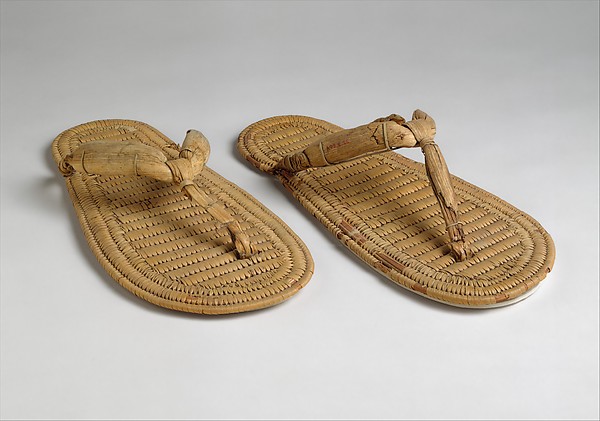
The first known shoe cushioning comes from Ancient Egypt, more than 3,000 years ago. As early as 1500 BCE, Egyptians layered woven papyrus, palm leaves and leather in their sandals to put a barrier between the foot and harsh desert ground.2 Next to a modern midsole you would barely call these cushioned, but you have to start somewhere.
The Romans took it further
The Romans did not invent cushioning, but they industrialised the problem it solved. They were the first to standardise road engineering into something close to the network we use today.3 Better roads meant people travelled much further on foot, and more steps on a harder surface meant sore feet.
Being an industrious lot, the Romans engineered a fix. They built shock absorption into their boots and sandals using cork, wool and felt.4 For the Roman army this was a genuine advantage. Soldiers could cover huge distances faster, and in relative comfort. Did the empire owe everything to comfy shoes? Probably not. Did comfy shoes help? Almost certainly.
The Dark Ages and the rise of the turnshoe
After Rome fell, cushioning went backwards for centuries. Much of that was down to the turnshoe, a single layer of leather stitched inside out then turned the right way so the seam sat on the inside for durability.5
Turnshoes were practical, weatherproof enough, easy to make and hard-wearing. What they were not was comfortable. They offered almost no shock absorption and no real support. Not much changed in the world of cushioning for a very long time. No wonder they called it the Dark Ages.
The early modern period: stacked soles and the first insoles
The next real step forward came when shoemaking became a recognised trade. Through the 17th and 18th centuries the cobbler became a mainstream profession, and competition pushed makers to experiment.6
One popular method was adding more layers of leather to the sole, creating the stacked leather sole.7 The main goal was durability and a bit of extra height above the filth of the street, with natural cushioning as a happy side effect. This period also produced some of the first insoles, made from felt, wool or cork.8 They were an early move towards the contoured padding we take for granted today.
The Industrial Revolution and the rise of rubber
Modern cushioning really begins with rubber. In 1839 a rubber-obsessed inventor named Charles Goodyear accidentally dropped a mixture of sulphur and rubber onto a hot stove.9 The heat triggered a reaction that made the rubber strong and elastic. The process became known as vulcanisation, and it changed footwear forever.10

The timing was perfect. Vulcanisation arrived alongside the Industrial Revolution, so this cheap, durable, springy material could suddenly be used in shoe soles at scale. Rubber soles got makers thinking about what else could go into a shoe to soften the ride, and felt and layered leather started appearing inside on the insole. The idea took hold first in work and military boots, then spread everywhere.
A tragic footnote on Charles Goodyear
Goodyear spent years trying to patent vulcanised rubber and more years defending the patent in court. He died barely solvent, having lost several of his children to the poverty that dogged the family. His descendants eventually saw some money from the patents, but only years later. During the automotive boom two brothers named their new tyre company in his honour, which is why we have Goodyear tyres.
The 1970s running boom
Cushioning stopped being just for workers and soldiers when running became a mass pastime in the 1970s. It is hard to picture now, but running for fitness was once considered strange. James Fixx, author of The Complete Book of Running, wrote about being stopped and questioned by police while jogging in the 1960s, simply because it looked so odd.11
Recreational running changed the brief for footwear. Cushioning was now about performance and protecting the body over long distances, and the shoe industry had to keep up.
The Nike Waffle Trainer
In 1974, Nike co-founder Bill Bowerman went looking for a sole that gripped better and absorbed more shock while staying light.12 During his experiments he poured liquid rubber onto his wife's waffle iron, which set into a pattern of raised nubs that gripped far better than the flat soles of the day. The waffle sole was born.

Nike Air and the visible cushion
Nike did not stop there. In 1979 the brand introduced Nike Air, starting with a visible air-filled pouch in the sole of the Nike Tailwind.13 The clever part was not only better shock absorption, it was that you could see it. Cushioning shifted from hidden function to visible feature, and comfort quietly became a status symbol.

The 1980s and 90s cushioning tech wars
Once Nike proved cushioning could sell shoes, the rest of the industry raced to answer. The result was a decade of competing systems, several of which still sit under the shoes people run in today.
ASICS GEL (1986)
ASICS introduced GEL, a silicone-based shock-absorption system built to cut impact stress in the heel and forefoot. It became a favourite for long-distance runners and remains a hallmark of ASICS running shoes.
Reebok Hexalite (1990s)
Reebok took inspiration from the honeycomb structures found in nature and built Hexalite, a network of hexagonal cells that spread impact out across the sole. It was lighter than traditional foam and offered durability without bulk, and it showed up in both running and basketball shoes.

Adidas Torsion and adiPRENE (late 1980s to 90s)
Adidas attacked cushioning and stability together. The Torsion System was a thermoplastic bridge under the arch that let the forefoot and heel move independently for better stability and a more natural stride. adiPRENE was a shock-absorbing foam in the heel that softened impact while returning some energy to each step.
New Balance and the case for stability
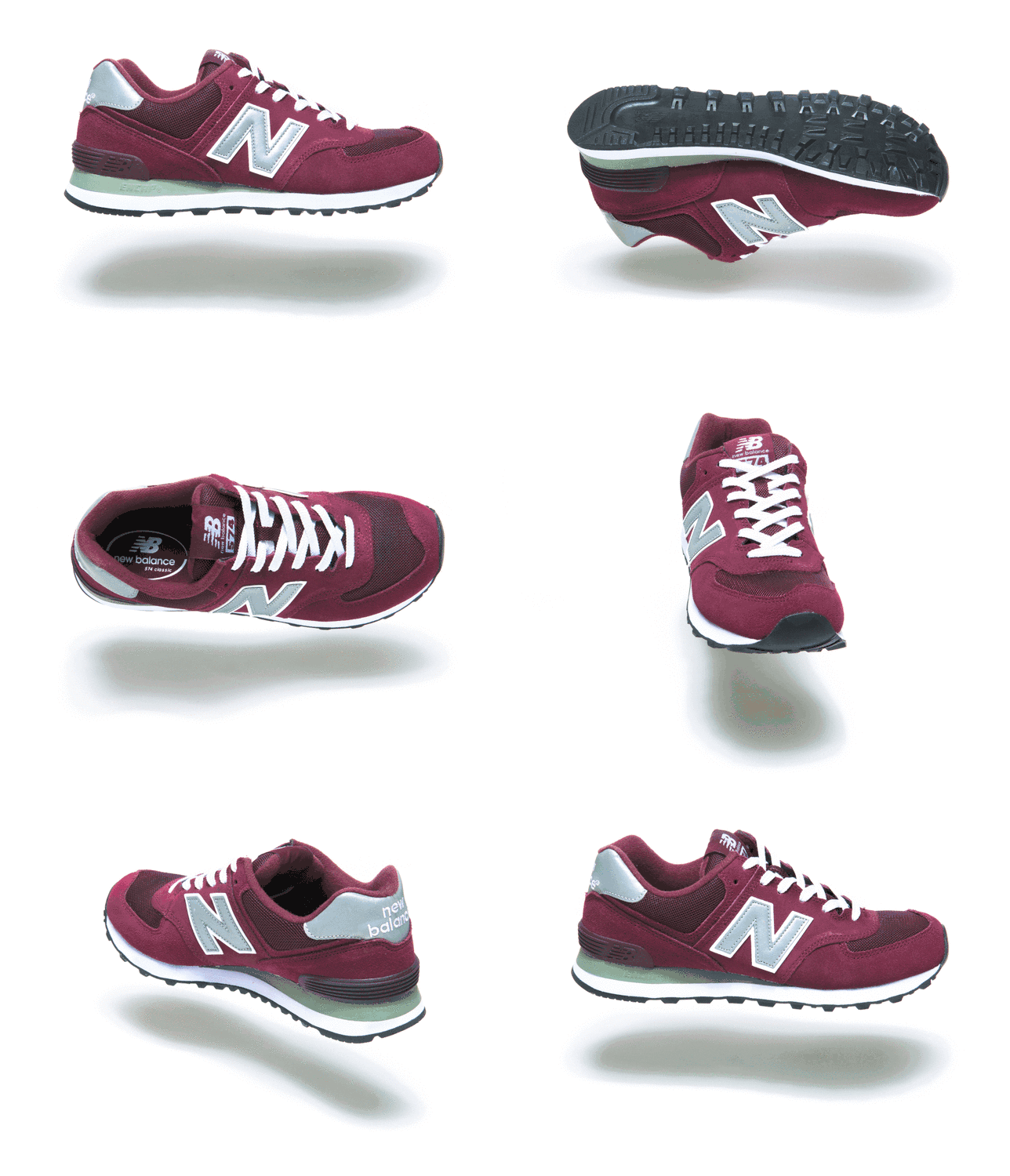
While rivals chased flashy features, New Balance leaned into biomechanics. It introduced dual-density foam midsoles tuned for both overpronators, who roll inward, and supinators, who roll outward. That focus on stability and fit made it a go-to for serious runners and anyone seeking more supportive shoes.
The 2000s to today: cushioning for everyone
By the 2000s the industry realised that all this running technology could help non-runners just as much. Comfort brands started bringing performance cushioning and arch support into everyday shoes you would happily wear to work or the shops.
Leading that shift were brands like Vionic, known for building arch support into stylish shoes, with cushioning at the heart of its Vio-Motion Support system. Scholl brought soft Memory Cushion footbeds to the everyday shoe, while Vitasole built its walking shoes around a rocker sole that rolls you through each step.
Today, cushioning is engineered for more than softness. It is tuned for shock absorption, stability, energy return and gait alignment all at once. You would be hard pressed to find a modern shoe that does not carry some form of cushioning technology descended from these trailblazers.
That history is exactly why every pair we stock has its cushioning checked before it earns a place on the shelf. The technology is remarkable now, but only if it actually shows up underfoot.
Frequently asked questions
When were the first cushioned shoes invented?
The earliest known shoe cushioning dates to Ancient Egypt, around 1500 BCE, when sandals were made with layers of woven papyrus, palm leaves and leather to protect the foot from hard, hot ground.
Who invented modern shoe cushioning?
There is no single inventor. Modern cushioning grew from Charles Goodyear's discovery of vulcanised rubber in 1839, then advanced through the 1970s running boom, most visibly with Nike Air in 1979, followed by competing foam and gel systems from ASICS, Reebok, Adidas and New Balance in the 1980s and 90s.
What was the first shoe with visible air cushioning?
The Nike Tailwind, released in 1979, was the first shoe to feature a visible air-filled pouch in the sole. It turned cushioning from a hidden function into a visible selling point.
Why does shoe cushioning matter?
Cushioning absorbs the impact of each step, which reduces stress on the feet, joints and lower back over a long day. Modern cushioning also supports the arch and returns energy, so good shoes do more of the work and you feel it less. You can read more in our guide to what shoe cushioning actually is.
Feel the modern end of the story
Thousands of years of trial and error, checked pair by pair and waiting on the shelf.
Shop our best sellersReferences
- Australian Museum. Walking on two legs, bipedalism. australian.museum
- Faraon Sandals. Shoes for eternity. faraon-sandals.cz
- University of Gothenburg. Roman roads laid the foundation for modern-day prosperity. gu.se
- London Museum. These boots were made for Romans. londonmuseum.org.uk
- Regia Anglorum. A beginner's guide to turnshoes. regia.org
- Medieval Britain. The medieval shoemaker and cobbler. medievalbritain.com
- Australasian Society for Historical Archaeology. Introduction to the analysis of archaeological footwear. asha.org.au
- Orange Insoles. The history of insoles. orangeinsoles.com
- Encyclopaedia Britannica. Charles Goodyear. britannica.com
- Encyclopaedia Britannica. Vulcanisation. britannica.com
- Fixx, James. The Complete Book of Running. archive.org
- Nike. Never Done: breaking the mould, the waffle mindset. nike.com
- Footasylum. The history files: Nike Air Max. footasylum.com